
5 Workforce Management Trends Every CHRO Should Know in 2026
From AI disruption to staffing shortages, here are 5 trends CHRO's must prepare for in 2026.
.png)
The workforce management industry is at a critical inflection point. Research from the World Economic Forum on the Future of Jobs indicates that nearly a quarter of existing jobs will be disrupted over the next five years. This rapid change is driven by the unparalleled speed at which AI, automation, and the green transition are reshaping global labor demand.
At the same time, McKinsey reports that while two-thirds of companies now use AI, most still struggle to turn that adoption into meaningful impact, creating a widening gap between experimentation and real operational value.
Labor markets are expected to become increasingly restrictive, particularly within the healthcare, logistics, and service sectors. The most effective CHROs are those who can anticipate upcoming trends and challenges, preparing their organizations accordingly.
Read on to discover five trends shaping WFM.
Trend 1: Workforce Management Software Deepens Vertical Specialization
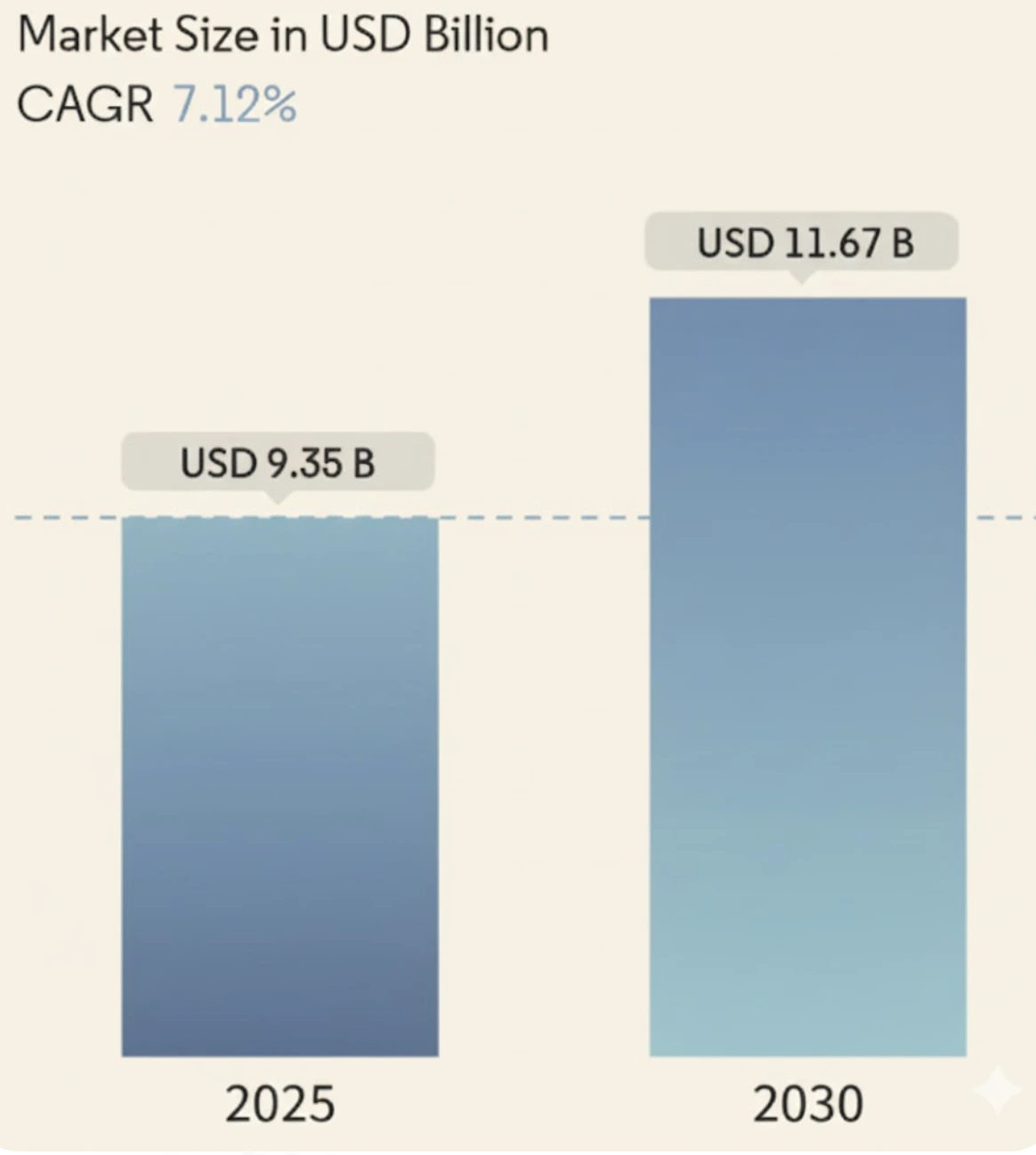
The workforce management software market is expected to grow from $9.35 billion in 2025 to an estimated USD 11.67 billion by 2030. Tangible benefits, including improved visibility into labor costs, streamlined compliance, and the incorporation of artificial intelligence, drive the expansion of workforce management solutions.
Competition is now concentrated in several key areas:
- AI recommendation engines,
- Biometric authentication,
- and low-code workflow builders.
These tools are significant because they allow HR teams to implement customizations efficiently, bypassing the traditional bottleneck of developer queues.
Trend 2: The Impact of Gen AI on Blue-Collar and White-Collar Workers
The common perception of a worker highly susceptible to automation frequently centers on blue-collar workers in fields such as manufacturing, warehousing, or truck driving, or sometimes a computer programmer. However, it is expected that generative AI will have only a negligible effect on these male-dominated blue-collar sectors.
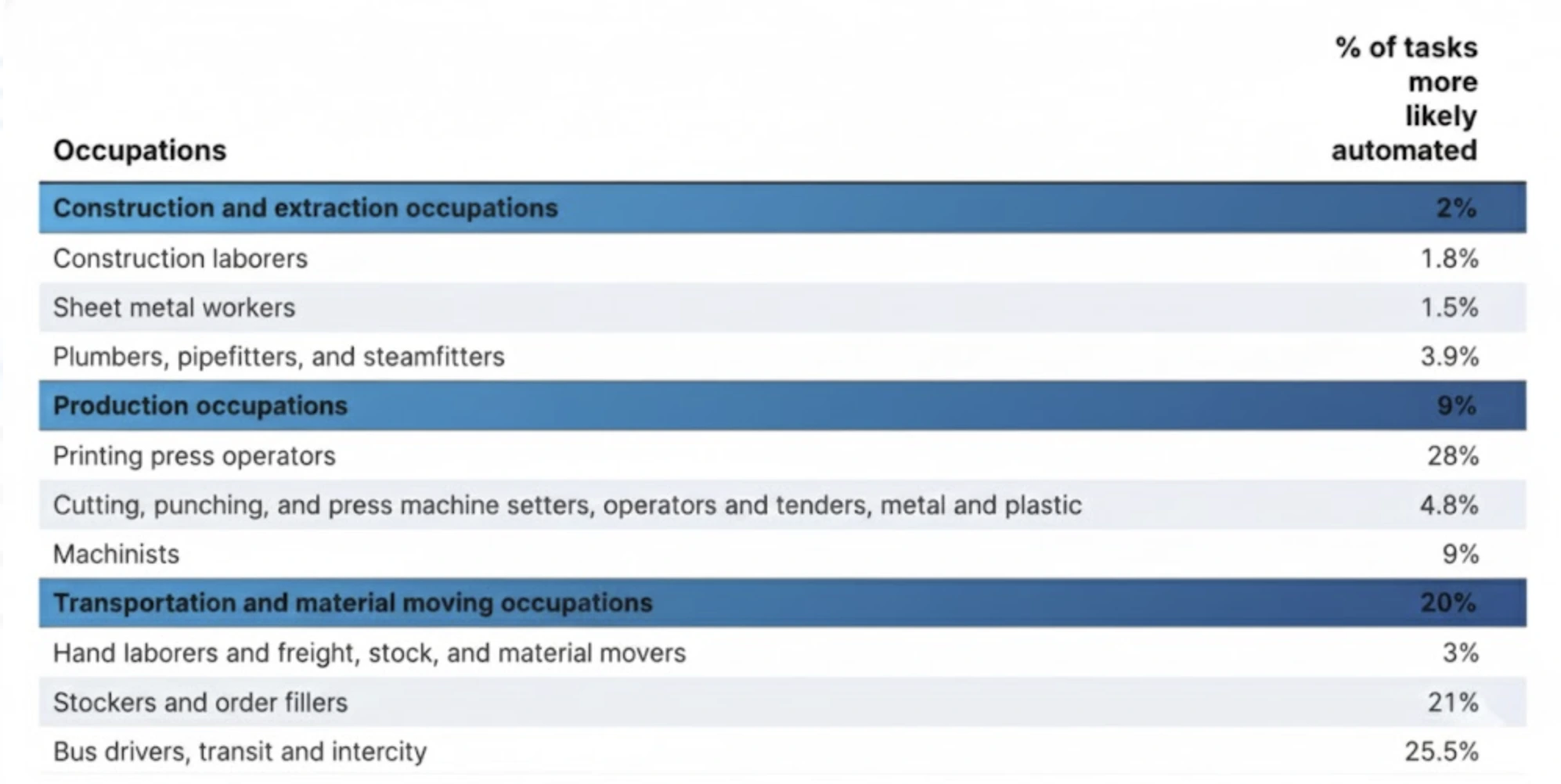
Based on OpenAI exposure data, Generative AI is expected to impact a wide array of occupations significantly.
- Approximately 85% of workers are likely to have at least 10% of their current work tasks affected by generative AI.
- For over 30% of the workforce, the disruption could be much more substantial, potentially affecting 50% or more of their occupational tasks.
The most significant exposure will be seen in both high-paying sectors requiring advanced degrees, such as law, STEM fields, business and finance, and in lower-paying, middle-skill office roles.
This might trigger a widespread shift in the global workforce industry.
According to the Work Shift Pulse Report, based on a survey of over 3,000 professionals, 62% of respondents indicated a willingness to switch from white-collar to blue-collar positions if it meant receiving better compensation and job stability than in their current role.
Trend 3: Staffing Shortages Spur Cloud-based WFM Investments
Healthcare is one of the largest and most complex industries in the world:
- The U.S. alone employs over 22 million people.
- The UAE and Saudi Arabia rely on expatriates for roughly 85% of clinical roles, driving complex visa tracking and multi-shift scheduling.
Staffing shortages in nursing and radiology make automation essential. Workforce optimization platforms are a strategic tool for achieving nationalization goals and balancing local talent with expatriate expertise, especially as healthcare spending in the GCC is projected to reach USD 159 billion by 2029.
AI platforms that verify credentials against licensing boards and match clinicians to available shifts shorten vacancy windows, thereby improving patient outcomes.
Executives consider scalable SaaS the only effective way to integrate Emirati labor-law updates, multilingual capabilities, and specialty-license verification. This approach avoids the costs associated with on-premise solutions ultimately, driving partnerships between international vendors and local system integrators, who are essential for managing residency and hosting compliance.
Pro tip: As demand continues to outpace resources, healthcare systems must build repeatable, tech-enabled workflows instead of simply hiring more recruiters.
Trend 4: Prioritizing Efficiency in the Hiring Process
Traditional recruitment models often position HR teams as order-takers rather than strategic advisors, particularly challenging when managing multilingual workforces and rural locations.
Platforms with agentic process automation now sift 600+ applications per day while maintaining tailored messaging that keeps candidates engaged. These gains free recruiters to focus on relationship building and strategic workforce planning rather than manual résumé review.
Enterprises routinely report a 75% reduction in time-to-hire after automating early-stage screening.
Check out the case study: How Relay automated over 2.2 million candidate checks and saved roughly 4.5 hours per hire.
Trend 5: Increasing Focus on Enhancing the Candidate Experience
Almost 86% of applicants prefer self-paced interviews that accommodate time-zone differences, widening the global talent pool.
This is further validated by a global Deloitte research study, which shows that organizations achieve superior performance by structuring work around human strengths such as creativity, empathy, judgment, and collaboration, while leveraging technology to manage repetitive or error-prone tasks.
Natural-language models can surface overlooked skills and craft tailored coaching tips, reducing drop-off rates among underrepresented groups and improving brand perception.
The next generation of frontline workforce tools is:
- Mobile-first (onboarding, shifts, pay, compliance)
- Task-aware (contextual prompts instead of static forms)
- Proactive (AI nudges for missing documents or expiring credentials)
- Integrated (one workflow from job offer → onboarding → scheduling → pay)
Final Thoughts
2026 is the year workforce management moves from slow, manual, and reactive to AI-powered, skills-driven, compliance-ready, and deeply human. CHROs who embrace this shift will operate faster, reduce risk, and build a workforce capable of thriving through 2030 and beyond.
Firstwork is revolutionizing workforce management, helping teams hire faster while staying compliant. Want to see Firstwork in action? Book a demo today!