Guide To Seasonal Hiring with AI: Why Speed and Compliance Can't Be Trade-Offs
Learn five proven strategies to eliminate operational bottlenecks, reduce onboarding time, and keep your workforce activation-ready during peak demand.
.png)
Seasonal hiring announcements from U.S. employers have been limited this year, with only a few companies publicly committing to holiday staffing. Although there might be a late hiring push if holiday sales exceed expectations, the cautious pace of announcements indicates that companies are not anticipating a significant seasonal surge.
The Seasonal Hiring Problem in Numbers
- The FAA cited air traffic control staffing shortages across 12 major U.S. cities that impacted over 12,000 flights in a single November weekend.
- The transportation and warehousing sector's seasonal hiring outlook is weaker, a 2% decrease from 2023 and the lowest total since 2019.
- The outplacement firm Challenger, Gray & Christmas projects seasonal retail hiring in 2025 to fall to its lowest point since the recession-hit season of 2009.
According to the Manpower Group's employment outlook survey, only 41% of U.S. employers anticipate increasing their staff, 42% plan to maintain current staffing levels, while 13% foresee reductions, and 4% remain undecided.
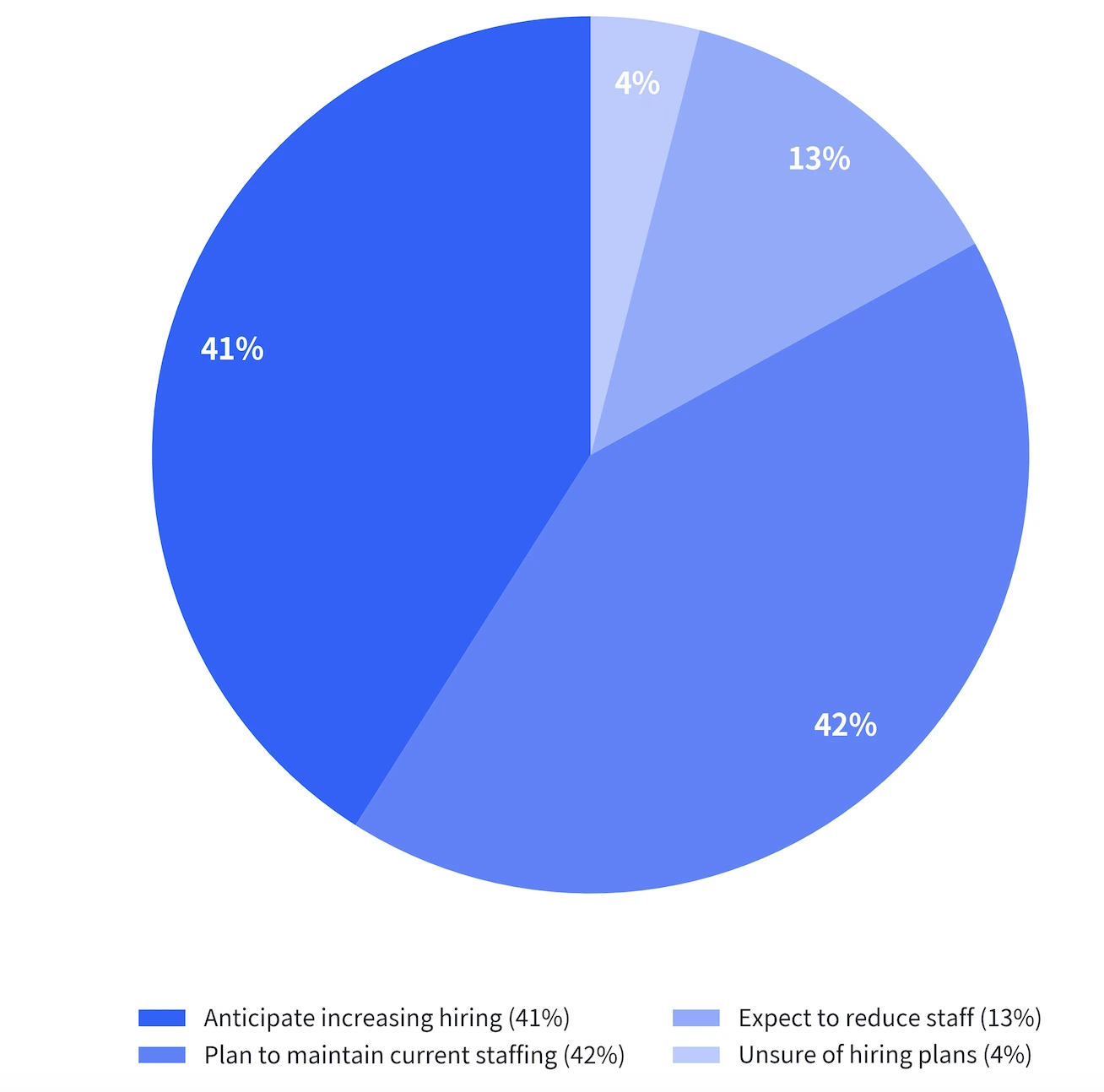
These numbers clearly indicate that companies across industries in the US are facing hiring challenges.
Top Seasonal Hiring Challenges
The biggest talent acquisition challenges for employers are attracting qualified candidates, managing high application volumes, and improving candidate experience through prompt communication.
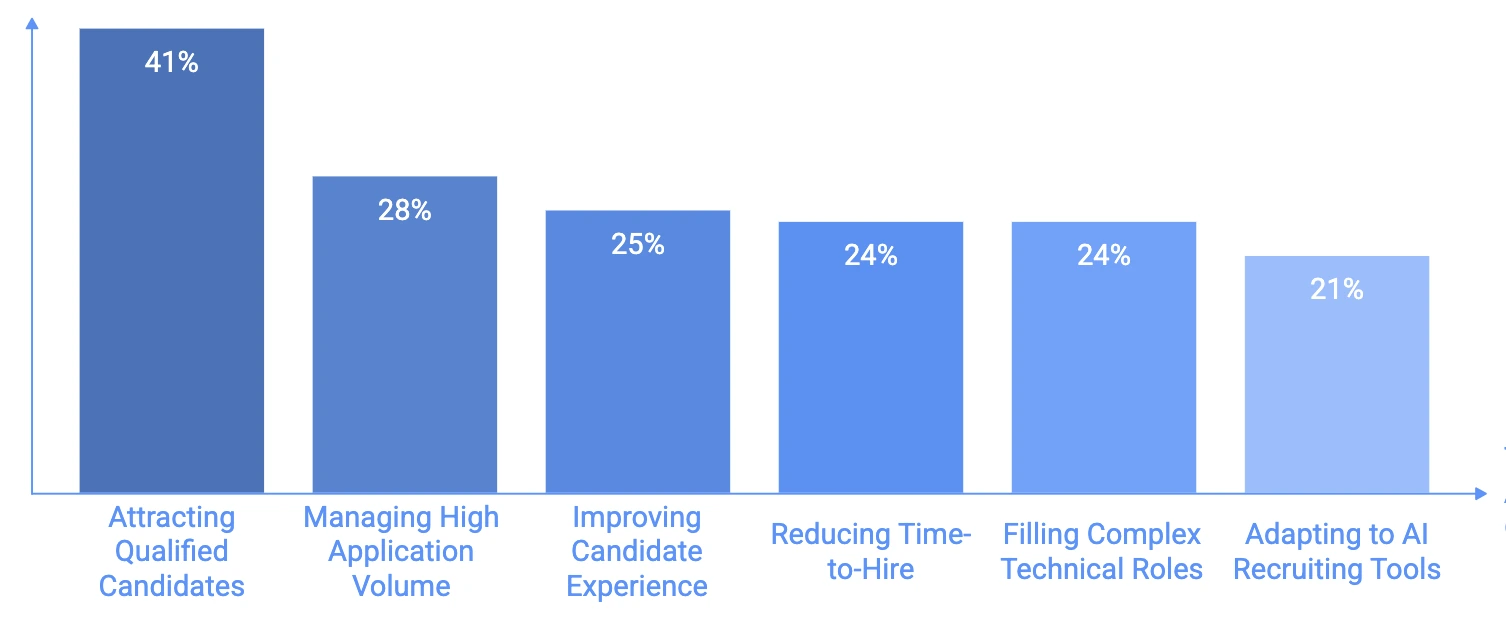
Adding to this crisis is the slow and manual process of staffing. Old HR metrics like “time-to-fill” don’t tell the full story anymore. Metrics like time-to-activate and time-to-hire carry more weight today, showing the cost (in time and money) of moving a person from an accepted offer to ready for their first shift.
The table below shows the average time-to-activate in different industries.
For staffing and operations leaders, the inability to quickly deploy workers to meet demand is a critical failure point that determines success or failure, particularly when trying to meet Q4 targets.
Five Mass Hiring Strategies to Fix Peak Season Bottlenecks
Seasonal hiring doesn't follow the rules of regular recruitment. You're activating hundreds of workers in weeks while maintaining the same compliance standards that regulators audit year-round. Here's how to automate the specific bottlenecks that kill activation speed without sacrificing compliance.
1. Automate Document Collection and Validation
Reliance on manual document processes predictably hinders hiring. Frontline hiring studies indicate significant drop-offs during the application, and onboarding phases. Specifically, up to 60% of candidates abandon applications due to forms being overly long or confusing.
Here’s a flow chart that represents individual stages in this outdated process. Each of these is a failure point that repeats at scale during seasonal hiring because coordinators are drowning with applications.
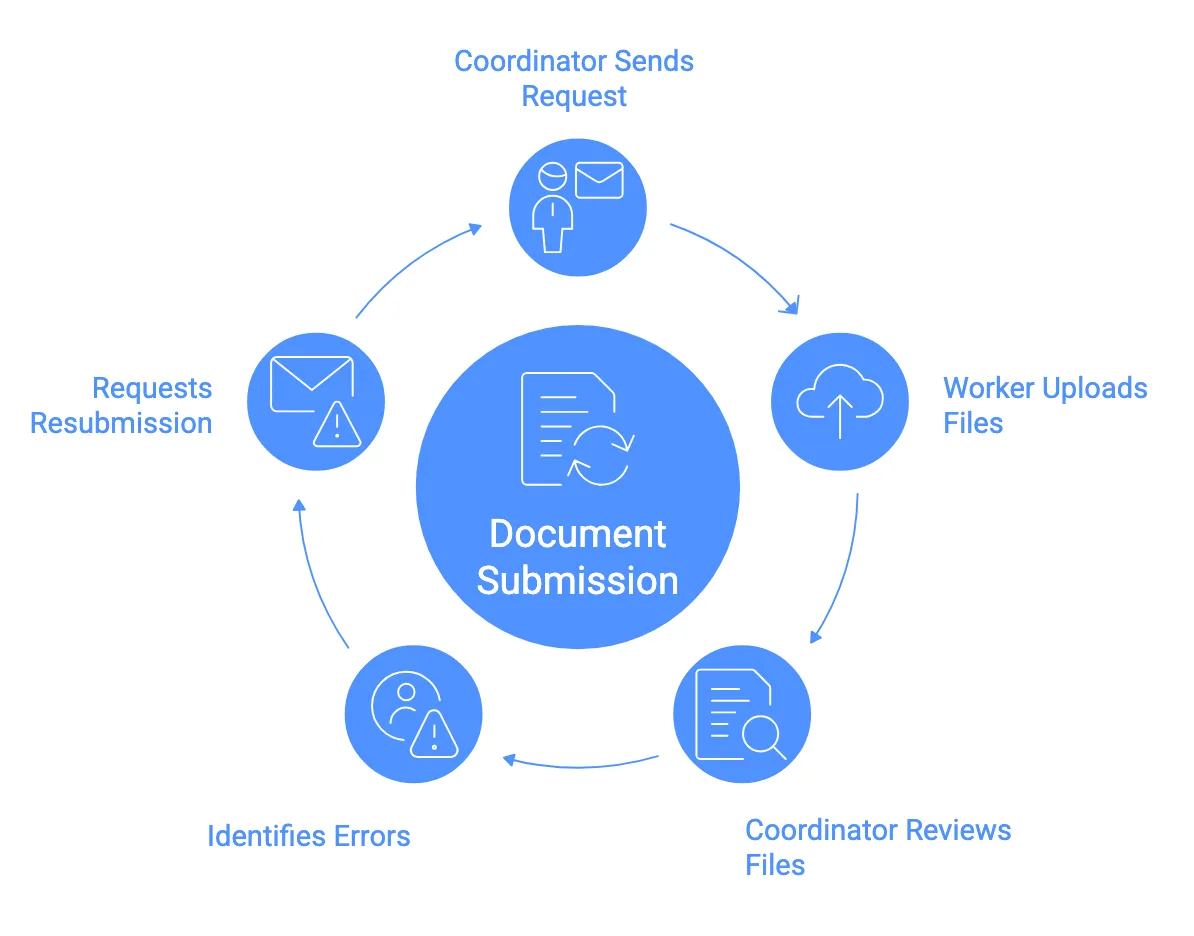
Automated document validation fixes this by validating every upload in real-time and the impact on activation speed is substantial. The elimination of back-and-forth document chasing compresses a multi-day process into something that happens in a single session, often in less than 24 hours.
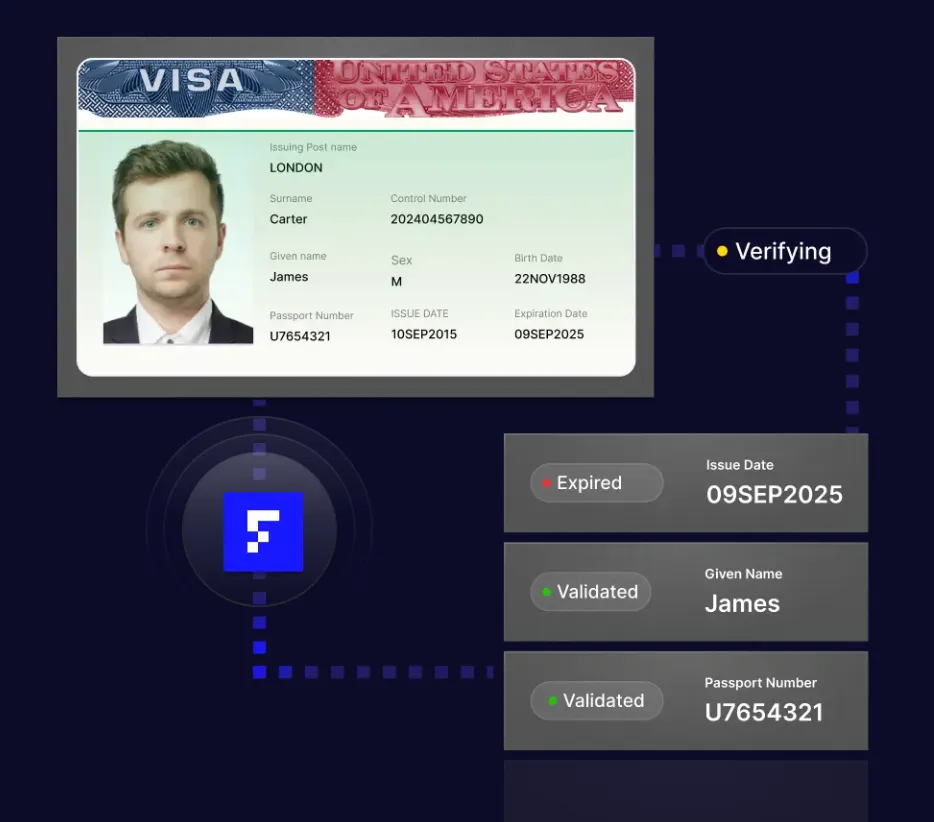
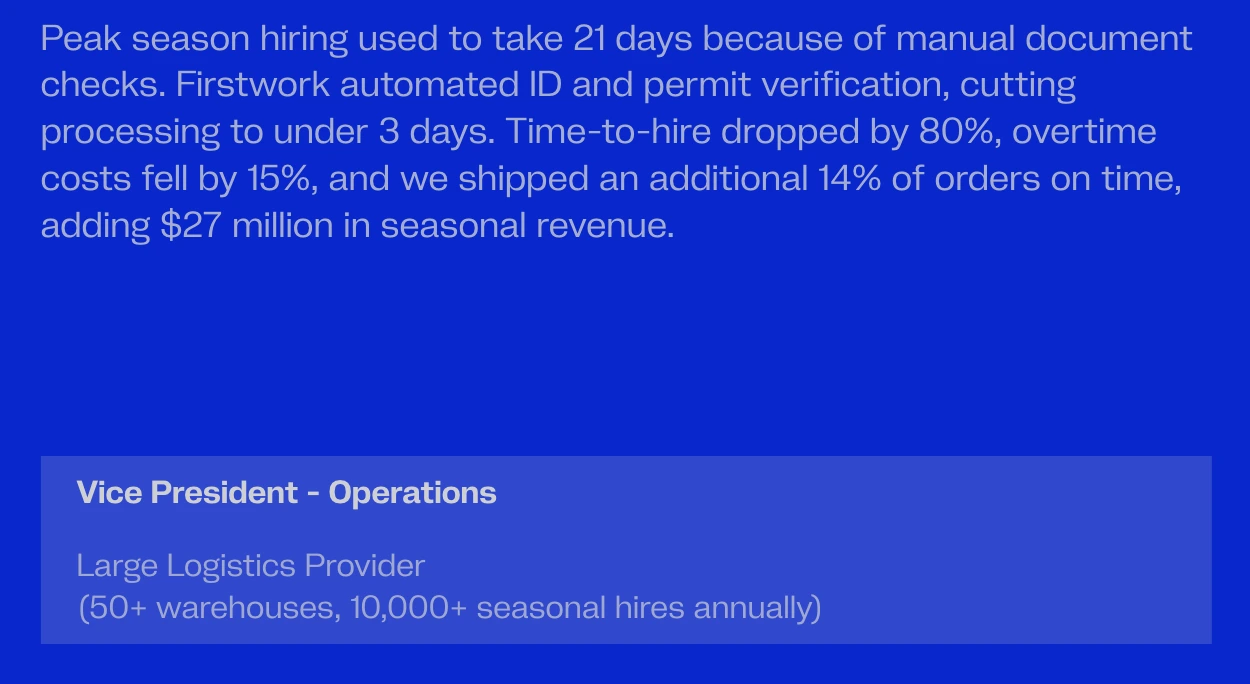
Check out the case study: How a staffing platform reduced its onboarding timeline from 10 days to 7 minutes using AI.
For seasonal hiring, where you need hundreds of workers cleared simultaneously, automated validation means documents get reviewed at the speed they're submitted, not the speed coordinators can manually review them.
2) Automate Web and Portal-Based Checks
Manual compliance tasks, such as background checks, MVRs, license verifications, and insurance verifications, are time-consuming. These require separate logins to various third-party systems, including DMV portals, insurance carrier websites, and, in some cases, proprietary client systems.
This means verifying a single hire can take 45 - 60 minutes, often split across multiple sessions while awaiting necessary results. For the high-volume demands of seasonal hiring, this manual approach is simply not sustainable.
Automating these web and portal-based checks eliminates this time-consuming process. Instead of coordinators logging in every time, the system handles every task automatically, launching dozens of parallel sessions, completing forms, capturing results, and storing timestamped screenshots for audit compliance.
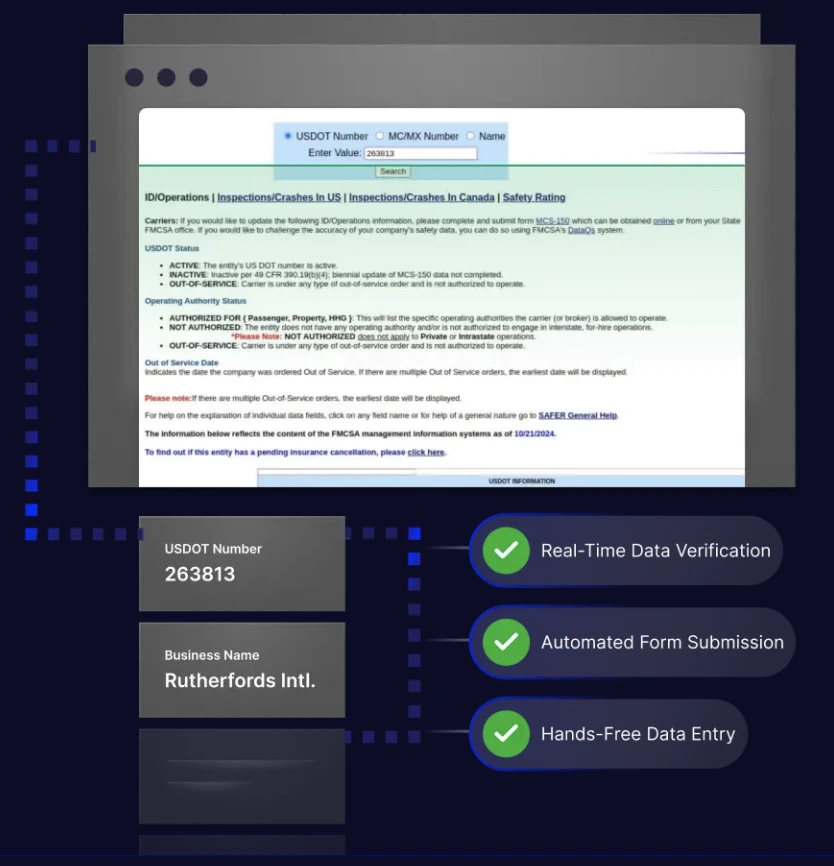
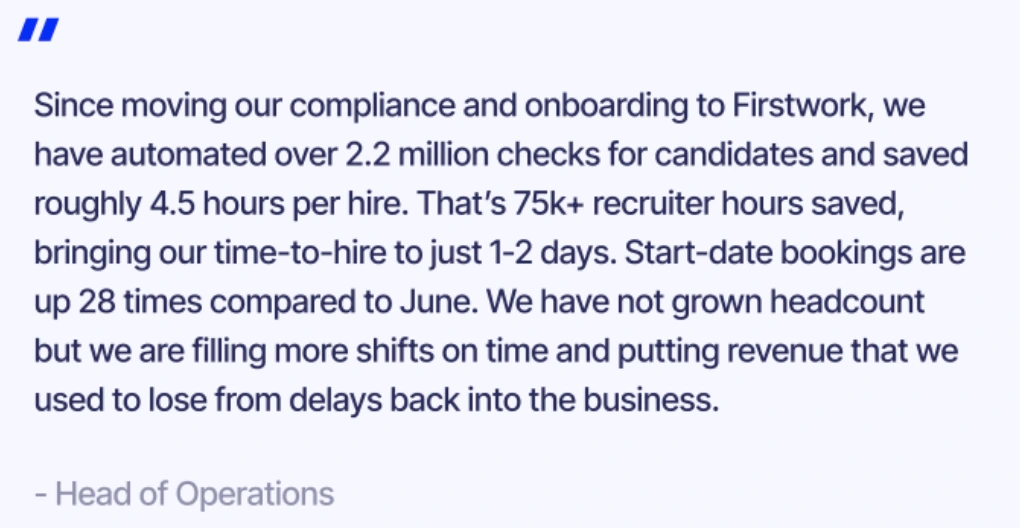
Check out the case study: How Relay automated over 2.2 million checks for candidates and saved roughly 4.5 hours per hire
3. Turn SOPs and Checklists Into Automated Workflows
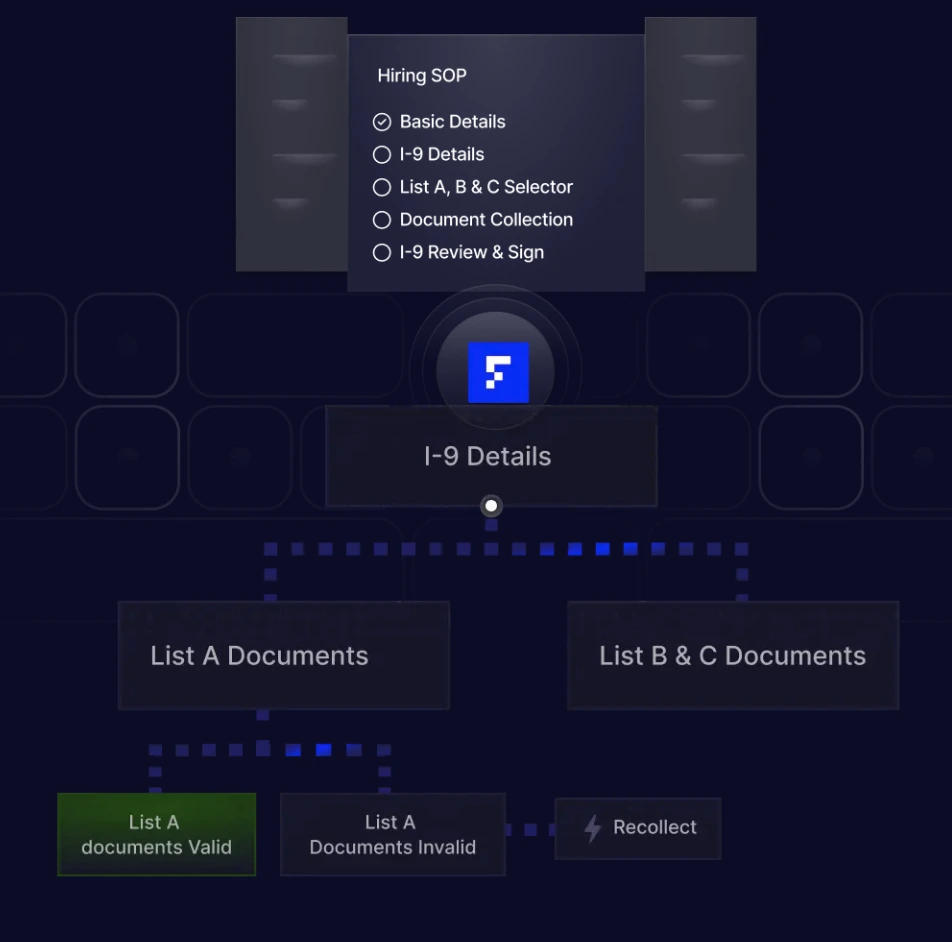
During periods of high-volume seasonal hiring, relying on manual SOPs often causes coordinators to lose oversight of critical tasks. This increased risk of forgotten steps leads to questions such as, "Was the training link sent?" or "Has payroll setup been handled?"
Creating automated workflows for these critical tasks is key here, which is the single biggest factor contributing to slow activation. The workflow automation triggers each step automatically without coordinator involvement. Here’s an example of what a simple automated workflow might look like for a US based company.
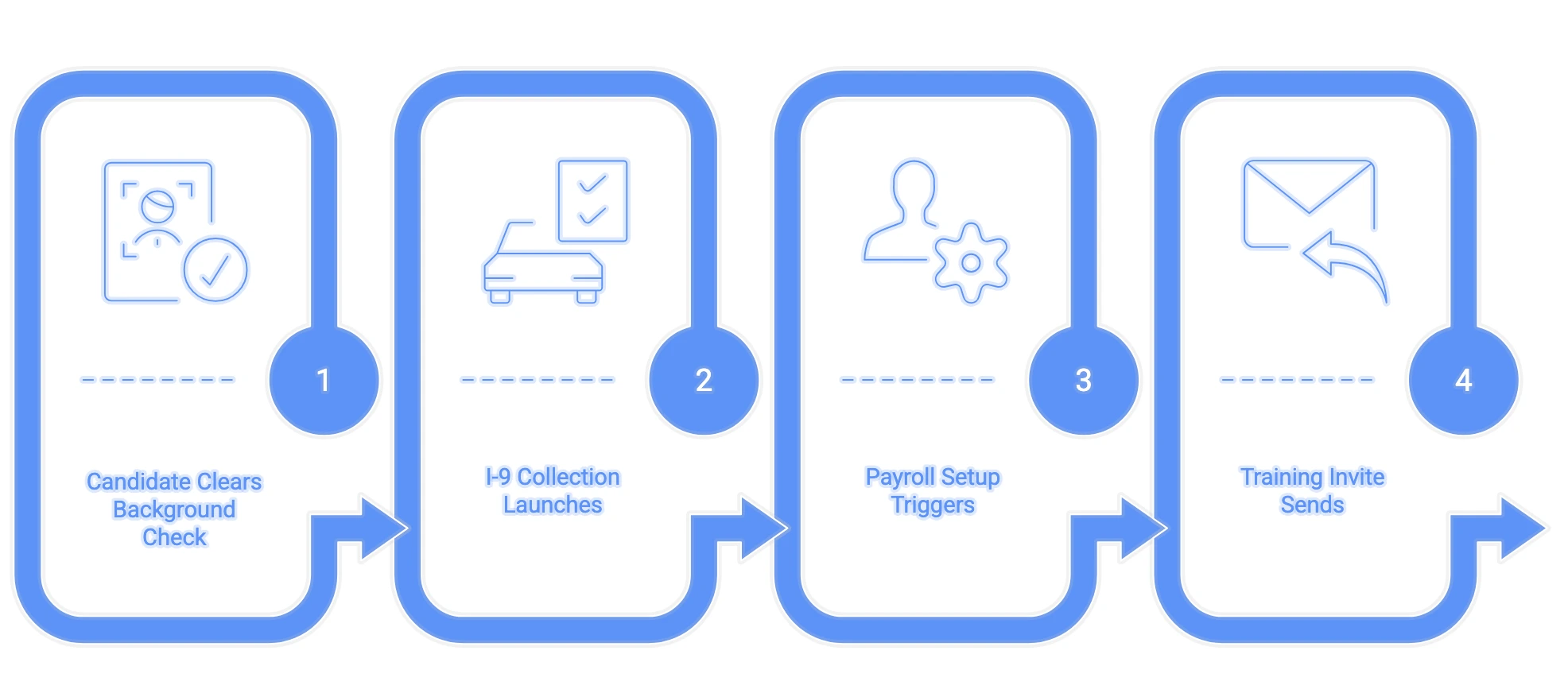
Pro tip: Use Firstwork’s Workflow Agent to ensure every worker progresses through every required step without coordinator babysitting.
The impact is immediate. Time lost in communicating status updates and handovers can quickly be moved to more pressing, strategic tasks that impact your margin during seasonal business spikes.
4) Monitor Credentials Continuously, Not Just at Hire
Organizations with a mix of full-time, part-time, and seasonal workers face greater compliance complexity. For seasonal workers, there are numerous compliance considerations such as verifying work eligibility, job classification (temporary or regular), tax compliance, benefits eligibility, holiday pay,
Moreover, driver's licenses, OSHA certifications, insurance policies, and work permits all have expiration dates that arrive without warning, unless you're actively monitoring them.
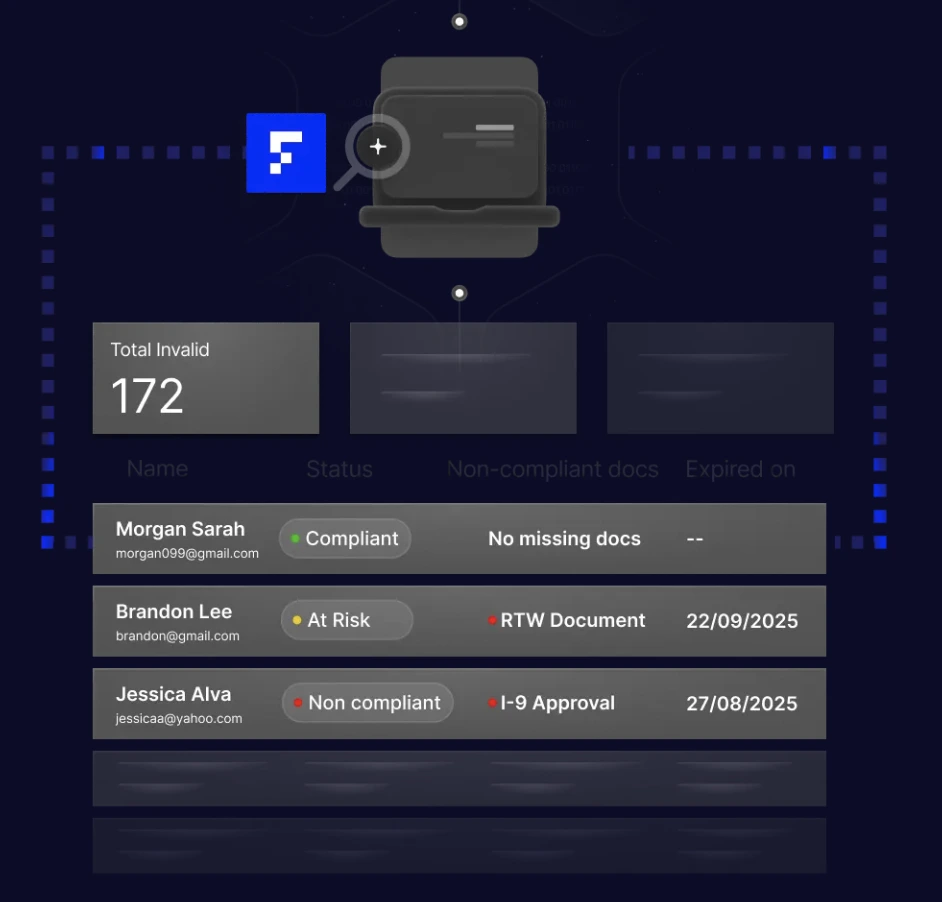
Continuous credential monitoring means every active worker's credentials get checked daily. So licenses expiring in 30 days trigger automatic renewal and recollection reminders via SMS and email. Workers who don't renew by the expiration date get automatically blocked from new shift assignments until they update their credentials. Coordinators can view a dashboard of upcoming expirations and proactively reach out to workers who haven't responded to automated prompts.
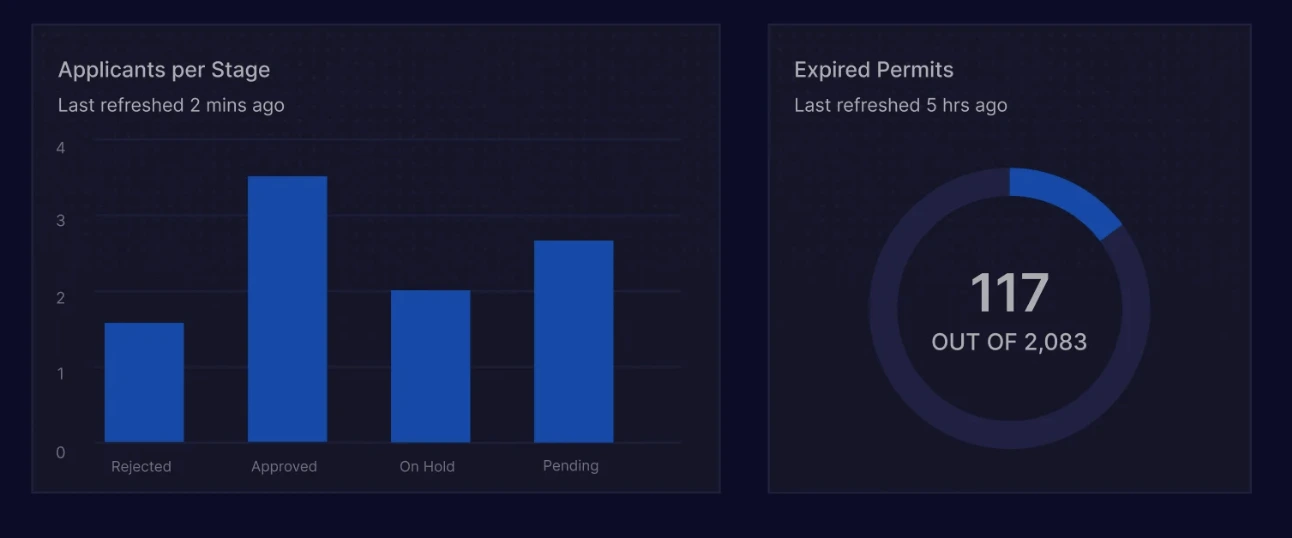
For seasonal hiring, continuous monitoring prevents a catastrophic failure: hiring and training hundreds of workers in October, only to discover in December that 20% of them have credentials expiring mid-season. Without automated monitoring, those expirations surface when payroll gets blocked or audits catch them, both scenarios that pull workers off the schedule exactly when you need the most coverage and workers need those jobs.
Pro tip: Use Firstwork’s Compliance Agent to perform 24x7 ongoing checks
5) Recover Missing Documents Automatically
Many times workers submit permits and licenses that may expire mid-season. At normal volumes, persistent coordinators can chase these down through sheer effort. At seasonal volumes, there simply aren't enough coordinator hours in the day.
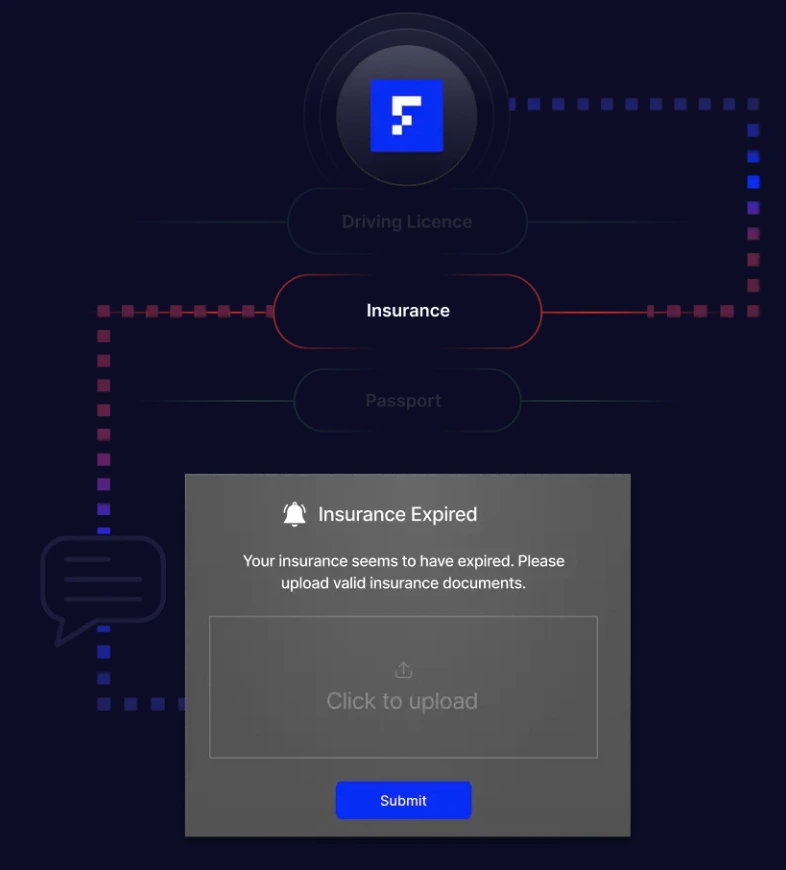
Automated recollection handles this process entirely. The moment a document is flagged as expiring soon, invalid or missing, the worker receives an SMS and an email with a direct upload link, eg.: "Your insurance card has expired. Tap here to upload your current card."
No app download required, no login, just tap, photograph the document, and submit. The system validates the new upload instantly and either clears the worker or prompts for another correction, all within seconds.
For seasonal hiring, this matters because document issues are your highest-volume, lowest-value coordinator task. If 30% of your 500 seasonal hires need at least one document resubmission (a conservative estimate), that's 150 manual follow-up conversations your coordinators need to have while also trying to process the next wave of incoming applications (it’s roughly 40 hours - we calculated it). Automated recollection handles those 150 conversations without involving the coordinator, freeing your team to focus on exceptions that require human judgment.
Pro tip: Use Firstwork’s Recollection Agent to recover missing documents and re-engage talent.
Measure What Matters: Stop Losing Seasonal Hires to Process Bottlenecks
Seasonal hiring fails when activation speed can't keep up with recruiting speed. You can source 500 candidates in two weeks, but if your onboarding process takes 18 days and runs on manual coordinator effort, you'll enter peak season short-staffed regardless of how many people you recruited. The gap between "we hired 500 people" and "we have 500 shift-ready workers" is where seasonal revenue disappears.
Experts suggest that operation leaders focus on KPIs that directly influence cost and revenue, rather than vanity metrics. Every seasonal program must track the following five key metrics right from the start:
- Per-hire time-to-activate: It’s the median time from offer acceptance to the candidate being eligible to work (able to be scheduled and paid). Track both the median and the mean, and capture the distribution tails (e.g., the 90th percentile); the long tail often hides audit/credentialing problems that blow up in peak weeks.
- Drop-off rate during pre-boarding: This should be measured at every stage from application to offer and finally day one. The drop-offs must be tied to causes such as poor image quality, missing ID, and long waits.
- Audit exceptions (and discovery time): These are not just counts; measure hours to assemble evidence per request (discovery time) and the number of high-risk exceptions that require legal/CS intervention.
- Fill rate impact: It is a key business metric calculated as (uncovered shifts / scheduled shifts) × contribution margin per shift.
- Overtime (and OT cost avoided): Captures the operational savings calculated as (hours X overtime premium avoided) because you filled scheduled shifts on time.
Define and measure each consistently so your finance team can roll real numbers into per-shift and per-season models.
End Game: Get A Recruitment Automation Software That’s Built for Operations & Centered Around Employees
Traditional ATS tools and manual onboarding were built for stability, not speed. When hundreds of workers need activation within days, bottlenecks form, and that's where the real cost creeps in. Compliance queues back up, and workers wait days for document checks that should take minutes.
A single mismatch in a name or license triggers a whole chain of manual reviews. Every small delay compounds until you’re left with trucks that can’t roll, store floors half-staffed, or customer orders piling up.
Traditional vs. Activation-First Workflow
In the middle of peak demand, such delays cause more than just inconvenience; they lead to lost output, missed SLAs, frustrated clients, and increased overtime expenses as the existing workforce struggles to fill the gaps.
Continue reading: Top 10 Recruitment Automation Tools.
At Firstwork, we are revolutionizing the workforce management and helping teams hire faster while staying compliant. Want to see Firstwork in action? Book a demo today!